Things to Know Before Visiting Myanmar: 15 Essential Tips
What Should You Know Before Visiting Myanmar?
Before visiting Myanmar, the essentials come down to five things: check your government's current travel advisory first, carry more cash than you think you need, dress modestly and remove your shoes at every pagoda, learn a few basic etiquette rules around feet and the right hand, and expect infrastructure — power, internet, transport — to be less reliable than elsewhere in Southeast Asia. Get those right and the rest of Myanmar tends to meet you more than halfway.
Myanmar rewards prepared travelers like few places on earth. It is one of Southeast Asia's most tradition-rooted countries, and the small courtesies — how you dress, how you hand someone a gift, where you point your feet — carry real weight. Here are the 15 things we most wish every first-time visitor knew, grouped so you can plan, pack, and behave with confidence.
Planning and Safety Basics
1. Check the current situation before anything else
This is the non-negotiable first step. Parts of Myanmar are affected by ongoing conflict, and conditions can change quickly — sometimes region by region, month by month. Read your government's travel advisory before you book anything, and read it again shortly before you fly. Our full breakdown of whether Myanmar is safe to visit right now walks through how to interpret advisories and which considerations matter most for tourists.
2. Sort your visa before you travel
Most nationalities need a visa to enter Myanmar, and most tourists arrange one in advance rather than on arrival. Myanmar has operated an e-visa system for tourists, but eligibility, fees, and processing rules change — verify the current requirements on the official government e-visa site or through a Myanmar embassy, not a third-party summary. Build in buffer time; do not book non-refundable flights before your visa is approved.
3. Time your trip around the monsoon
Myanmar has three broad seasons: a cool dry season (roughly November to February), a hot season (roughly March to May), and a monsoon (roughly June to October). The cool dry months are the most comfortable for temple-heavy itineraries, and also the busiest. For a month-by-month picture of weather across the regions, see our guide to the best time to visit Myanmar.
4. Cash is king — plan for it
Myanmar runs largely on cash. The local currency is the kyat, ATMs can be unreliable or empty, and card acceptance is limited outside upscale hotels. Practical rules of thumb:
- Carry more cash than feels comfortable, split between bags and pockets.
- US dollars are the most useful foreign currency to bring for exchange — and moneychangers in Myanmar are famously fussy about condition. Crisp, unmarked, untorn bills exchange best; folded or worn notes may be refused or discounted.
- Exchange rates and banking rules shift often in Myanmar, so check recent traveler reports close to your departure rather than relying on older guidebook figures.
5. Expect patchy power and internet
Electricity outages are a routine part of daily life in much of Myanmar, and internet access has been subject to restrictions and slowdowns in recent years. Download offline maps, keep a power bank charged, carry a small torch, and tell people at home that you may be intermittently unreachable. Treat connectivity as a bonus, not a given.
Dress, Temples, and the Body
6. Dress modestly — shoulders and knees covered
Myanmar is conservative by regional standards. For pagodas and monasteries, covered shoulders and knees are required for everyone, women and men alike. In practice this standard serves you well everywhere: lightweight long trousers or a below-the-knee skirt, plus a t-shirt or light shirt, keeps you respectful and — counterintuitively — cooler in the sun than shorts and a vest.
7. Shoes and socks come off at every pagoda
At Buddhist religious sites in Myanmar you go barefoot — not just shoes off, but socks too, and usually from the outer gate, not just the shrine itself. This is taken seriously. Wear sandals or slip-ons you can shed in seconds, and expect marble platforms to be scorching by midday; early morning and late afternoon visits are kinder to your soles. If you are planning temple-dense days, our Bagan temples guide covers how to structure them.
8. Consider a longyi
The longyi — the ankle-length wrapped sarong worn by men and women across Myanmar — is everyday dress, not a costume. Buying one at a local market is cheap, and wearing it is genuinely practical: it is cool, it always satisfies temple dress codes, and locals tend to receive the gesture warmly. Ask a vendor to show you the knot; men and women tie it differently.
9. Mind your feet and your head
In Burmese Buddhist culture, the feet are the lowest, least sacred part of the body and the head the most sacred. That translates into simple rules:
- Never point your feet at a Buddha image, a monk, or another person — sit cross-legged or with feet tucked behind you at temples.
- Do not touch anyone on the head, including children.
- Do not step over people who are seated or lying down.
10. Use your right hand — ideally both hands
Give and receive things — money, gifts, business cards — with your right hand, supporting your right forearm with your left hand for extra politeness, or simply use both hands together. The left hand alone is considered unclean for handing things over. This one habit, once learned, smooths dozens of small daily interactions.
Culture and Daily Etiquette
11. Treat monks and Buddha images with visible respect
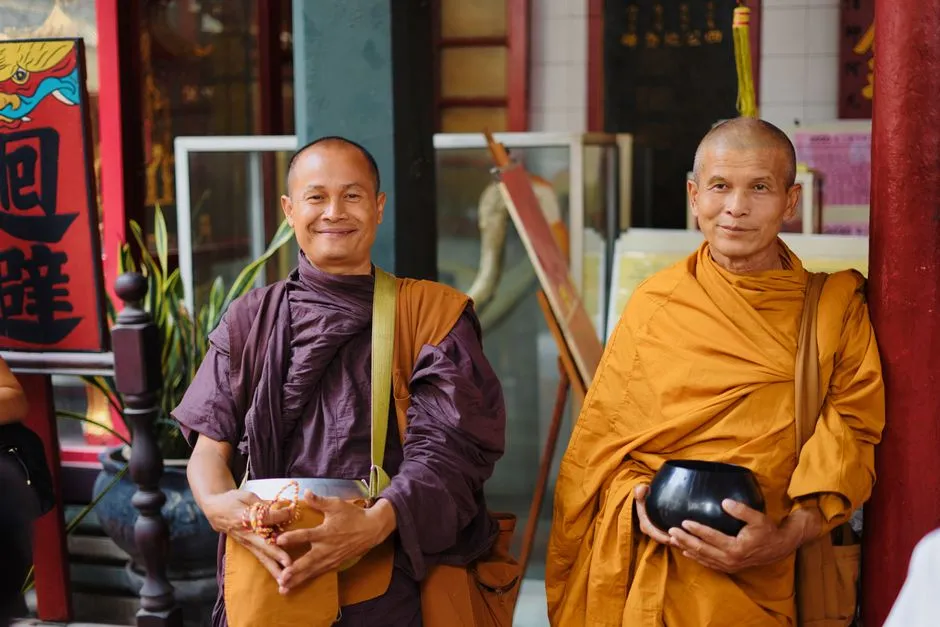
Monks are held in high esteem. Women should not touch a monk or hand items to him directly — place the item within reach instead. Never pose disrespectfully with Buddha images: no climbing on them, no turning your back to them for a selfie. Buddha tattoos can cause genuine offense, and travelers have faced serious trouble in Myanmar over perceived insults to the religion; keep such tattoos covered.
12. Learn "mingalabar" and a little patience
"Mingalabar" is the all-purpose friendly greeting, and "cezu tin ba de" means thank you. Even a handful of Burmese words shifts interactions noticeably. Pair the vocabulary with the local rhythm: raised voices and public displays of anger cause everyone involved to lose face. Calm, smiling persistence achieves far more than frustration ever will.
13. Embrace tea shop culture — and know the food
The tea shop is Myanmar's living room: low stools, sweet milky tea, endless small plates. Sitting down at one is the fastest way into everyday life. Come hungry for mohinga — the fish-broth noodle soup widely considered the national dish — plus Shan noodles and laphet thoke, the fermented tea leaf salad you will not find anywhere else in the world. Standard traveler food caution applies: eat where turnover is high, stick to bottled or purified water, and ease into street food.
14. Ask before photographing people
Most people in Myanmar are relaxed about photos, and many will happily pose — but ask first, especially with monks, nuns, and worshippers. A gesture toward your camera and a smile is enough. Avoid photographing anything military — soldiers, police, checkpoints, government or military buildings. This is a firm rule, not a courtesy.
15. Spend thoughtfully
Where your money goes matters more in Myanmar than in most destinations. Favoring family-run guesthouses, local restaurants, independent guides, and market vendors keeps your spending in ordinary people's hands. Tipping is not traditional, but rounding up or leaving small notes for good service is appreciated. Bargain in markets with a smile — over small sums, generosity beats victory.
Quick Reference: Do and Don't
| Situation | Do | Don't |
|---|---|---|
| Pagodas | Remove shoes and socks at the gate; cover shoulders and knees | Point feet at Buddha images |
| Meeting monks | Show respect; place offerings within reach | Touch a monk (especially as a woman) |
| Money | Carry ample cash; bring crisp US dollars | Rely on ATMs or cards |
| People | Ask before photos; greet with "mingalabar" | Touch heads; raise your voice |
| Photography | Ask permission for portraits | Photograph anything military |
The Mindset That Ties It All Together
None of these 15 tips requires perfection — travelers who make an honest effort are forgiven almost any small mistake, usually with a laugh. What Myanmar asks of visitors is attentiveness: to the current situation before you commit, to the cash in your pocket, to where your feet are pointing. Bring that attentiveness, and you will find one of the warmest, most memorable countries in Asia waiting on the other side of it.